Cruises with kids are one of those rare vacation formats that actually work for everyone in the family. Parents get to rest, kids are thrilled, and each generation gets what they need without anyone having to compromise.
Most families turn into repeat cruisers after their first trip — and there's a reason for that. A cruise solves the biggest parental dilemma of any vacation: how to combine grown-up rest with the energy of kids at completely different ages. On a ship, it just happens naturally.
Living in South Florida puts us in a pretty rare position. Three cruise ports within about an hour, dozens of destinations, the ability to leave on a Friday and be back Monday morning. The only real question is which cruise actually fits your family.
What's Actually Included in Your Cruise Fare
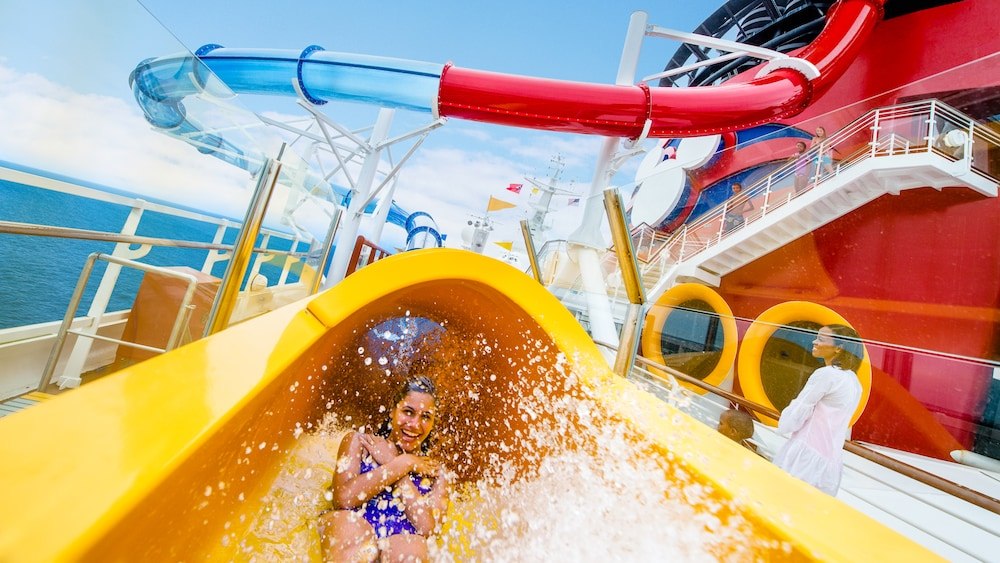
The base price covers a full vacation: your cabin, meals in the main dining rooms, entertainment, kids' clubs for every age group, shows, pools, and most of what's happening onboard.
That alone is a lot of value. You don't plan every day. You don't cook. You don't load the dishwasher. You don't spend forty minutes figuring out what to do with the kids before lunch. The structure runs itself.
What you can add on top:
- Specialty restaurants for date-night dinners
- Premium drink packages
- Spa treatments
- Shore excursions at the islands
- Professional family photos
- Faster Wi-Fi (the basic plan is fine for messages, less fine for streaming)
A realistic rule of thumb: budget about 30–40% over the base fare for extras. That gives you room to enjoy the ship without doing mental math at every counter.
Choosing a Cruise Line: Each One Feels Different
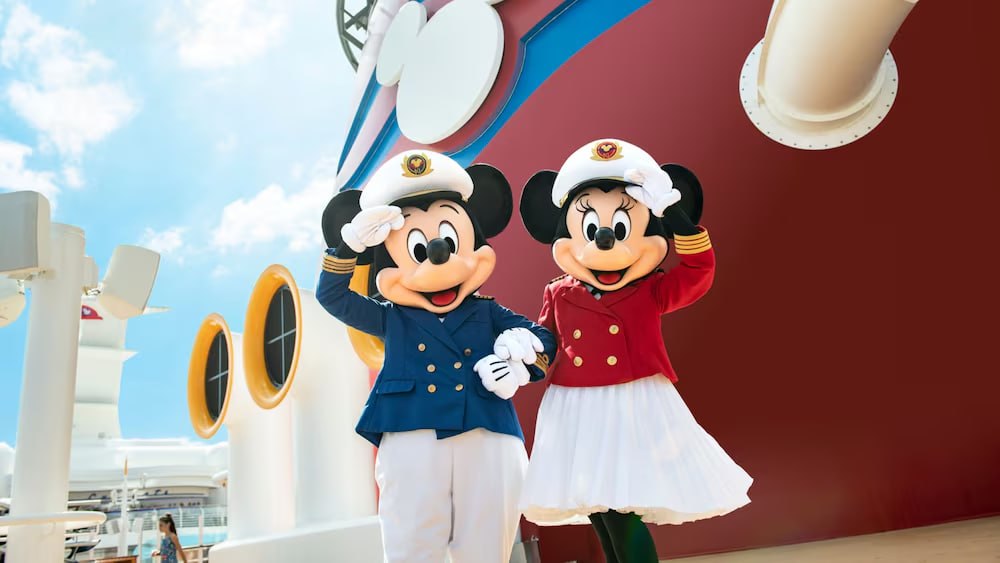
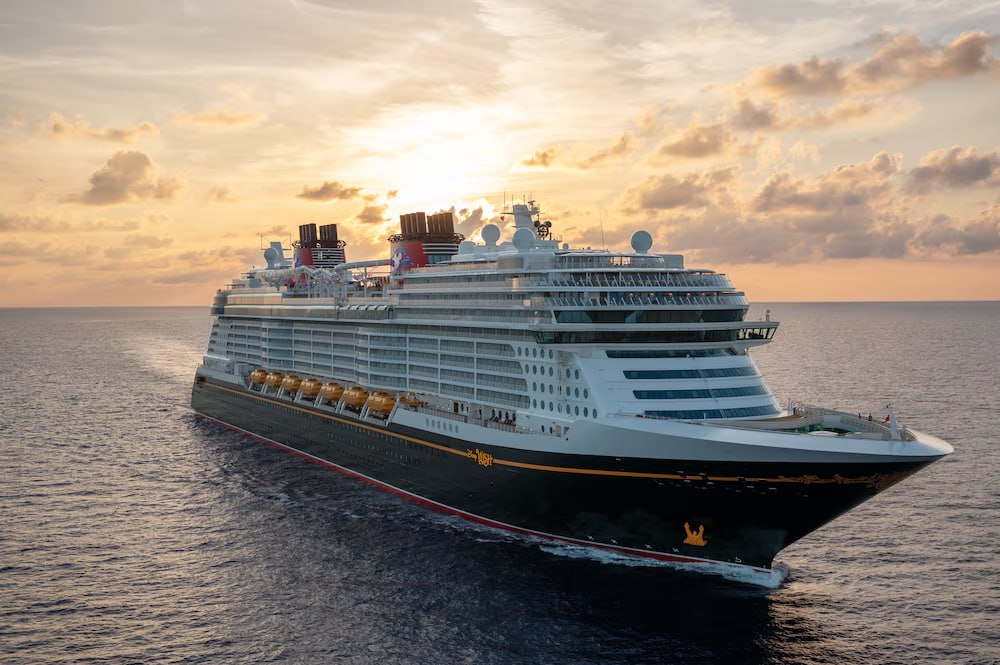
Disney Cruise Line: The Family Cruise Benchmark
Here's what makes Disney different. They've built the only cruise line where a three-year-old, a twelve-year-old, and the parents are all genuinely happy at the same time. The kids' clubs are split by age in a way that feels thought-through rather than tacked on.
The youngest kids (3–5) get character interactions and play-based programming. School-age kids (6–10) get quests and adventures. Tweens (11–13) get creative studios and tech zones. Teens (14–17) get their own lounges where they can hang out with peers and feel like the staff isn't hovering.
Rotational dining is one of those small details that ends up mattering more than it sounds. You move through three different restaurants over the week, but your servers travel with you. By night three, they know that your daughter only eats the bread, that your son needs his apple juice without ice, and that you'd love another glass of wine without having to ask.
The staff is trained around kids at a level you feel in every interaction. The shows are Broadway-quality. The ships are kept genuinely clean. And the most telling thing: kids actually want to go to the clubs, because the programming is real.
The fleet includes the classic, recently refreshed Disney Magic and Disney Wonder, plus the Dream and Fantasy, and the newest builds — Disney Wish (2022) and Disney Treasure (2024). More ships are in the pipeline.
This is the premium end of the family-cruise market. You're paying for the level of service and detail, and most families who sail Disney once book Disney again.
Best for: Families who want a high-touch experience and are happy to invest in it.
Royal Caribbean: The Floating-City Approach
Royal Caribbean builds ships that are essentially small cities — water parks, rock walls, surf simulators, zip lines, ice shows, even robotic bartenders. For active families with kids who like physical play, it's a great match.
The teen zones are some of the best at sea: gaming consoles, sports courts, dedicated lounges. Tweens and teens often come back asking when the next Royal sailing is.
The kids' clubs are solid, the dining variety is wide, and the newest Oasis-class and Icon-class ships feel like waterfront resorts that happen to move.
Best for: Families with kids of mixed ages, especially if your kids love physical activity and adventure parks.
Norwegian Cruise Line: Freedom and Flexibility
Norwegian invented "freestyle cruising," which basically means no fixed dinner time, no dress code, no assigned seating. With multiple kids on different schedules, that flexibility is a real gift.
Splash Academy is a well-run kids' program, the ships are modern, and the teen offerings are solid. The value-to-experience ratio is one of the best in the mainstream market.
Best for: Families who want to keep the day loose and improvise as you go.
Celebrity Cruises: Modern, Lower-Key Luxury
Celebrity positions itself in the "modern luxury" space, and it tends to land well with families whose kids are a bit older (10+). The programming for tweens and teens is thoughtful, the ships look and feel grown-up, and the food is consistently strong.
Best for: Families with older kids who want a slightly more sophisticated cruise vibe without losing the family-friendly setup.
Choosing the Length and Route
Short Cruises (3–4 Days, Bahamas)
This is the ideal first cruise. Long enough to settle into the ship and have a real beach day, short enough that no one feels overwhelmed. Modern short-itinerary ships are well-equipped for kids of every age.
Summer is especially good — strong air conditioning onboard, an island beach day in the middle, and the ship as your air-conditioned base when the kids have had enough sun.
Mid-Length Cruises (5–7 Days, Caribbean)
The sweet spot for most families. You actually decompress, you see a few ports, and the kids find their rhythm on the ship. Eastern Caribbean (St. Thomas, St. Maarten) and Western Caribbean (Cozumel, Jamaica, Grand Cayman) both deliver beautiful days at sea and good shore time.
Longer Cruises (7+ Days)
Worth it once you know the format works for your family. You get to slow down, explore more ports, and actually use the spa, the specialty restaurants, and the slower corners of the ship.
Shore Excursions: How to Pick the Right Ones
Through the cruise line. Highest organization, the ship waits for you if your tour runs late, vetted guides, predictable safety standards. The easiest option and a good default for your first port.
Private tours. Smaller groups, more interesting programming, often a better story. Worth the extra research time, but you carry the risk of getting back to the ship on schedule.
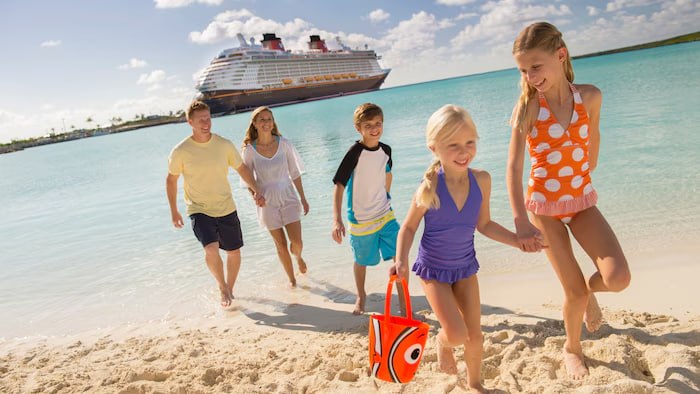
On your own. In Nassau, Cozumel, Grand Cayman, and a few others, the main beaches and town areas are walkable or a short taxi ride from the port. You can put together a perfectly nice day yourselves with very little planning.
A practical mix: take one tour through the ship to see how it's done, do one day on your own, and decide from there what feels right for the next trip.
The Practical Stuff
Documents. Worth getting right before you pack — the rules are different than people often assume.
For US citizens on closed-loop cruises (the ones that leave and return to the same US port — which is most cruises from Florida), kids under 16 only need an original state-issued birth certificate. Adults 16 and older can use a passport, or a state-issued birth certificate paired with a government-issued photo ID. Two details that matter: it has to be state-issued (hospital "baby feet" certificates don't count), and it has to be the original or a certified copy — not a photocopy.
For international cruises — anything that doesn't return to the same US port, includes South American ports, or passes through the Panama Canal — everyone in the family needs a passport, including the kids.
For non-US citizens and permanent residents: passport plus green card, always.
One honest tip: even when a birth certificate works, a passport is still the safer choice. If anyone gets sick or misses the ship at a foreign port, you'll need to fly home — and that requires a passport.
What to actually pack:
- Sunscreen — bring plenty, onboard prices are high
- Swimsuits — three or four per kid, things don't dry overnight
- Rashguards for the kids
- One outfit per person for formal night (optional)
- A light sweater or hoodie — the AC is aggressive
- A few favorite snacks the kids will recognize
- A small nightlight for the cabin
Cabin choice. With kids, we'd push you toward at least an oceanview, ideally a balcony. Kids wake up, see light, see water, understand where they are. An interior cabin with no window can be disorienting for younger ones.
Booking Through Miami Family Club
Families in our club get access to group rates and added benefits when booking cruises — and the price difference compared to booking on your own can be meaningful.
Beyond the rate itself, you get help choosing the right ship and itinerary for your family, onboard credit on most sailings, and on some cruises, private shore excursions that aren't available through standard booking.
It's not the search-and-compare experience of an aggregator site. It's someone walking through the choice with you, from cabin category to what to do in each port.
Why Cruises Work for Families
A cruise removes the biggest source of vacation stress, which is the endless planning. You wake up, breakfast is ready. The kids want activity, there's a program waiting. Evening comes, dinner and the show are already set. The next morning, new island.
That structure is what lets parents actually rest, and what gives kids a full, engaged trip without anyone running themselves into the ground.
This is why most families book again after the first one. Not because they were sold on it — because it worked.
If you've been thinking about a first cruise, or you want to know whether a specific ship or itinerary fits your family, write to us. We've sailed most of these lines with our own kids, and we're happy to talk it through with you before you book anything.